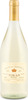
Looking For A Great Muscat?
Let the WineAlign Critics help you find the Right Wine
for the Right Price, Right Now!

Let the WineAlign Critics help you find the Right Wine
for the Right Price, Right Now!
Buyers’ Guide to VINTAGES – April 2, 2016
Old World Meets New and Cosmopolitan Syrah By Sara d’Amato with notes from Michael Godel The upcoming spring release offers more than a few head-turners. Those most memorable are the wines that defy the stereotypes of their origins. Many of these wines are featured in the carefully curated thematic of “New World vs. Old”, the […] More
by Sara d’Amato Across the country, the Icewine harvest has recently finished. The Canadian ambrosia, which has put focus on our burgeoning wine regions, is still our greatest wine export and one that is big business. Although numerous wineries across the country produce at least one bottling per year, others focus the majority of their […] More
County in the City 2016 – Try and Buy Event with Special Offers
Join us on Thursday, April 14, at Berkeley Church in downtown Toronto for the 5th Annual County in the City, and sample some of the best wines Prince Edward County has to offer! Small-batch and family-owned wineries will sample more than 70 different wines, including many vintage and specialty wines. This tasting event will delight the palates […] More
National Wine Awards of Canada
Discover Canada's best wines! In 2015, 18 judges tasted 1,408 wines from 205 wineries across the country to identify Canada's top wines.
View Award-Winning Wines
World Wine Awards of Canada
Seventeen judges tasted 1,000 wines in 21 categories in 2015 to find the world's best wines sold in Canada under $50.
View Award-Winning Wines
Muscat grapes are used to make a variety of sweet dessert wines in just about every part of the wineworld and, more rarely, dry or semi-dry table wines. A fair amount of the dessert wines are fortified, though muscat is also used to produce wines from late harvest, botrytized or partially-dried grapes, as well as an increasingly popular style of semi-sweet sparkling wine, Moscato, originally from Piedmont, in Italy, but now produced in a growing number of countries. There are, in fact, a number of varieties bearing the name Muscat: Muscat Blanc à Petits Grains (the most frequent), Muscat of Alexandria, Black Muscat, Moscato Giallo, Muscat Ottonel, New York Muscat, etc. All these variations share an exuberant fruitiness, with aromas of peach or apricot, as well as floral and/or spicy notes. They also bear a large number of synonyms, depending on whether they are planted in French-, Spanish-, German-, Italian-speaking or other countries. Among the numerous appellations where muscat is present, notable examples include the vin doux naturels of Southern France (Frontignan, Beaumes-de-Venise, Rivesaltes, etc.), the muscats of Alsace (where the grape is also used in traditional white blends), Samos Muscat from Greece, Moscatels from Portugal and Spain and, here in Canada, a number of wines in Nova Scotia where Muscat Ottonel and New York Muscat play a successful and important role.